

 David Hinwood
Recyclops
Textile waste is a destructive force on this globe, every day now we seem to see various news stories on how clothing waste and development causes more and more ecological damage.
Meet
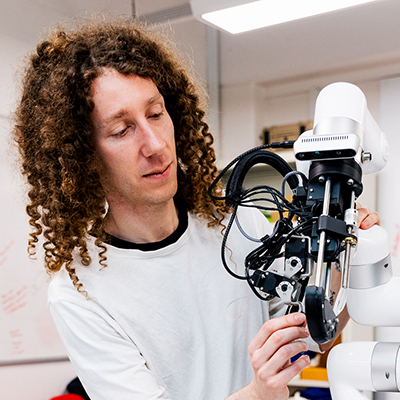
Dr David Hinwood is an award-winning multidisciplinary researcher specialising in robot design, human-robot interaction, and machine-learning applications. He is the first PhD graduate from the University of Canberra’s Collaborative Robotics Lab with seven years of development experience in research and robotics deployments. Areas of technical experience include ROS development (C++/Python), motion planning, and data-driven techniques for perception and control.
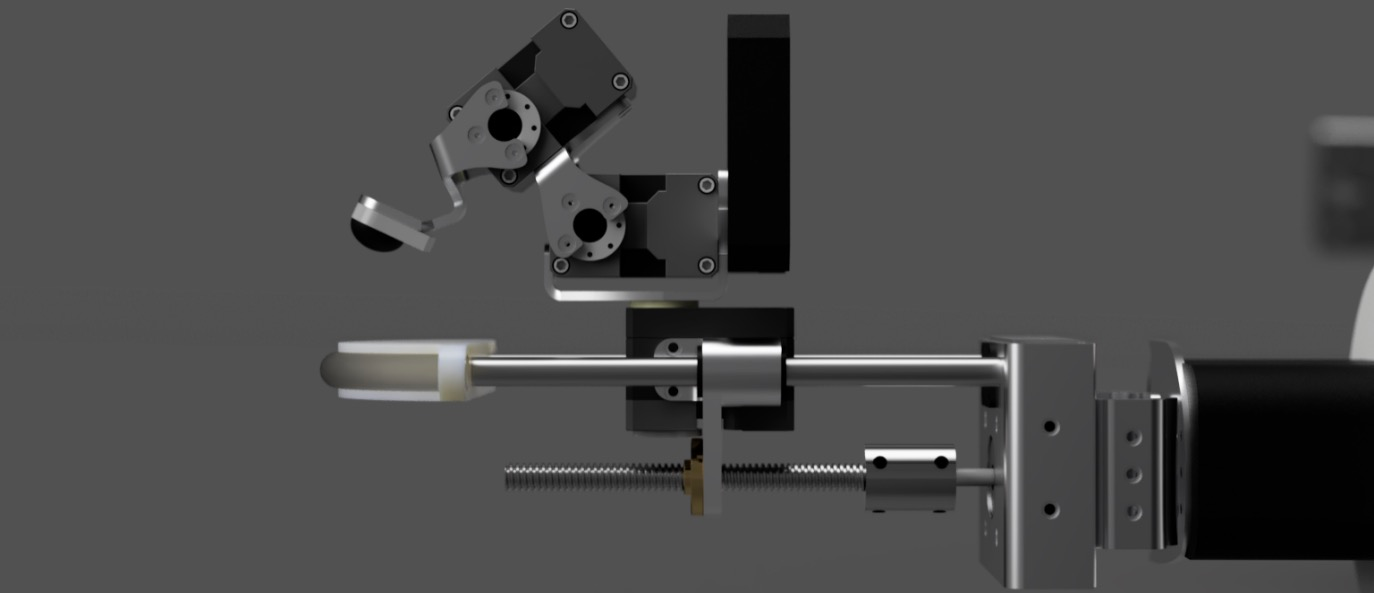
Dr Hinwood’s PhD focused on designing and fabricating a human-inspired robot gripper for manipulating textiles with reinforcement learning algorithms. This technology is moving from research into an industrial context for textile recycling, contributing to the development of circular economies with automation. Further information surrounding his research and experience can be found on his website (https://robodave94.github.io/).
In this paper, we present a novel framework for robotic attention modulation that enables dynamic regulation between attention-seeking and attention-avoidance behaviours through gaze feedback. For this feedback, we incorporate SGE with gaze fixation counts to create a metric that evaluates not just the quantity but also the quality of visual attention. Our approach implements two complementary modules, a Gaze Avoidance Module (GAM) and a Gaze Garnering Module (GGM), both powered by reinforcement learning (RL) algorithms that respond to real-time human gaze patterns. Thus the system continuously adapts to each individual’s current gaze feedback level, dynamically calibrating the robot’s attention-modulating behaviours to match personal attention thresholds. This personalisation ensures that the robot can effectively engage with users when needed, while remaining unobtrusive when appropriate, all based on real-time analysis of human gaze patterns.
This paper presents the design of a human-inspired gripper for textile manipulation, drawing on insights from human hand biomechanics and textile handling techniques to create a gripper that can effectively manipulate textiles in waste sorting applications.
Researching human-robot interaction “in the wild” can sometimes require insight from different fields. Experiments that involve collaborative tasks are valuable opportunities for studying HRI and developing new tools. The following describes a framework for an “in the wild” experiment situated in a public museum that involved a Wizard of OZ (WOZ) controlled robot. The UR10 is a non-humanoid collaborative robot arm and was programmed to engage in a collaborative drawing task. The purpose of this study was to evaluate how movement by a non-humanoid robot could affect participant experience. While the current framework is designed for this particular task, the control architecture could be built upon to provide a base for various collaborative studies.