
This paper presents Capabilities2, an advanced skill-based control framework for human-robot interaction (HRI) in ROS2. Capabilities2 enables robots to perform complex tasks by defining and managing skills, which are modular units of functionality. The framework facilitates interoperability, communication, and service management between different components of the robot system, enhancing the robot's ability to interact effectively with humans.

Meet
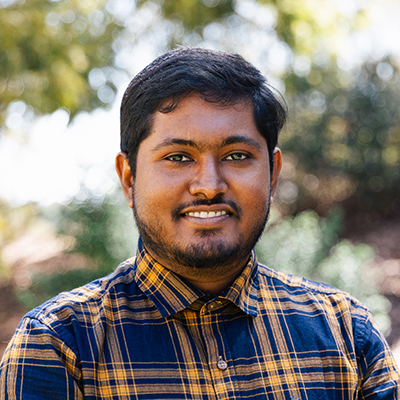
Buddhi Gamage
Research Student
Buddhi Gamage is a PhD candidate in the Faculty of Science and Technology at the University of Canberra, Australia. Originally from Sri Lanka and with a background in Computer Science, his research focuses on embodied artificial intelligence, cognitive robotics, and robot learning. His current work investigates world models, representation learning, and failure-aware robotic manipulation, with a particular interest in understanding how predictive representations can improve the robustness, generalisation, and interpretability of autonomous robotic systems. His broader research interests include embodied cognition, machine learning, human-robot interaction, and intelligent autonomous agents.
Buddhi's Publications
This paper provides a foundation for further study into social presence in HRI, by clarifying mechanisms of quantifying and experimentally manipulating social presence, allowing insight into ways in which this factor drives HRI.
This paper explores the integration of multiple AI systems to unleash artificial cognition, presenting a novel framework for combining different AI models to achieve more complex and human-like cognitive abilities.