
Publication
Capabilities2 for ROS2: Advanced Skill-Based Control for Human-Robot Interaction
This paper presents Capabilities2, an advanced skill-based control framework for human-robot interaction (HRI) in ROS2. Capabilities2 enables robots to perform complex tasks by defining and managing skills, which are modular units of functionality. The framework facilitates interoperability, communication, and service management between different components of the robot system, enhancing the robot's ability to interact effectively with humans.
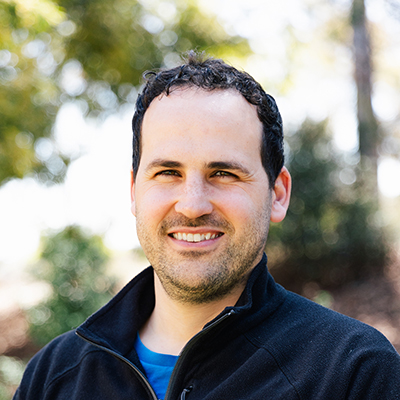
Michael Pritchard
Engineering Manager
Michael is an experienced robotics engineer and lab manager for the Collaborative Robotics Lab with a track record in designing, integrating, and deploying award-winning and innovative vision and data acquisition systems across robotic platforms and sensor networks in agriculture. His expertise extends to embedded design, remote sensor networks, robotics, automation, and control. He has a strong understanding of engineering principles and a deep knowledge of robotics technologies, enabling him to provide exceptional support to both researchers and students.
More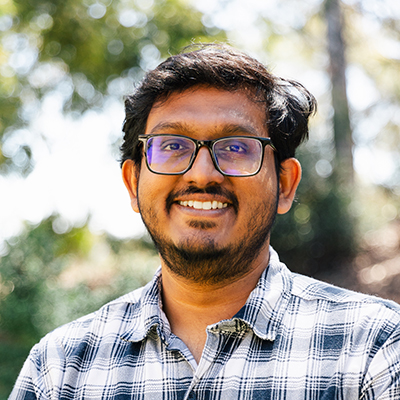
Kalana Ratnayake
Research Student
Kalana is a PhD candidate at the Faculty of Science and Technology, University of Canberra. He has a background in Computer Science and Engineering. His research interests include robotic navigation and manipulation, human-robot interaction and LLM-based robotic planning. His current research focuses on llm based generative behaviour planning for social robots. His areas of technical experience include ROS1 and ROS2 development (in C++ and Python), Navigation stack and Moveit stacks, robotic planning, and low-level robot control.
More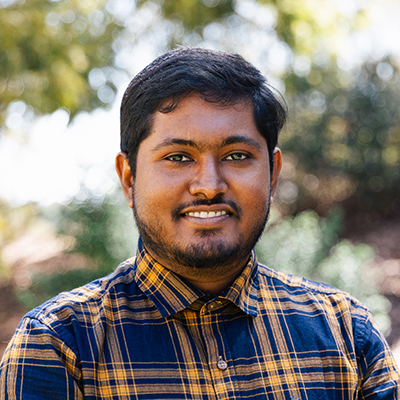
Buddhi Gamage
Research Student
Buddhi Gamage is a PhD candidate in the Faculty of Science and Technology at the University of Canberra, Australia. Originally from Sri Lanka and with a background in Computer Science, his research focuses on embodied artificial intelligence, cognitive robotics, and robot learning. His current work investigates world models, representation learning, and failure-aware robotic manipulation, with a particular interest in understanding how predictive representations can improve the robustness, generalisation, and interpretability of autonomous robotic systems. His broader research interests include embodied cognition, machine learning, human-robot interaction, and intelligent autonomous agents.
More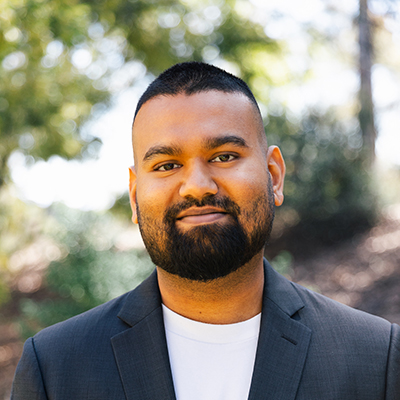
Maleen Jayasuriya
Staff
Maleen Jayasuriya is a Lecturer in Robotics at the University of Canberra’s Faculty of Science and Engineering with a research focus on human-robot interaction and explainable AI (XAI) in robotics. Maleen holds a Bachelor’s degree in Electrical and Electronic Engineering from Sri Lanka and a PhD from the University of Technology Sydney, where his research focused on robot perception, localisation, and deep learning. He later completed a postdoctoral fellowship at UTS, contributing to research on collaborative robotics for sustainable construction.
More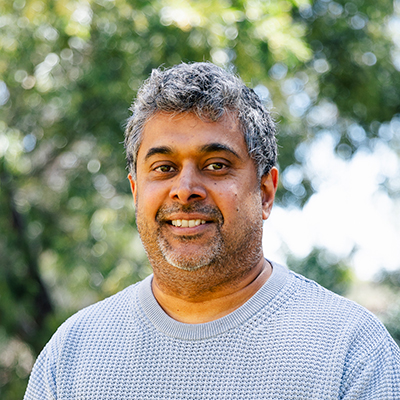
Damith Herath
Founder/Director Collaborative Robotics Lab
Professor Damith Herath is the Founder and director of the Collaborative Robotics Lab (CRL). His work explores how robots and humans can collaborate, with an emphasis on the intersection of engineering, psychology, and the arts. His interdisciplinary approach actively seeks insights across diverse fields, promoting innovation and collaboration that transcends traditional disciplinary boundaries.
More
M. Pritchard, K. Ratnayake, B. Gamage, M. Jayasuriya and D. Herath, “Capabilities2 for ROS2: Advanced Skill-Based Control for Human-Robot Interaction,” 2025 20th ACM/IEEE International Conference on Human-Robot Interaction (HRI), Melbourne, Australia, 2025, pp. 1067-1071, doi: 10.1109/HRI61500.2025.10973863